
Connector & hose fixes, $100–$200
The brittle flexible connector behind the cooktop, a small part responsible for an outsized share of leaks.
There is no "close enough" in gas. Every job we do in Manly, a leak chased down, a cooktop connected, a new line run to an outdoor kitchen: finishes the same way: holding pressure on a gauge, certified, documented. That is the whole standard, and it is not negotiable.
NSW law reserves every millimetre of gas work for licensed gasfitters, connecting an oven included, because gas fails differently to water. A water mistake stains a ceiling; a gas mistake is a leak you breathe, a fire you host, or carbon monoxide you never smell. It is no coincidence that the leaks we chase most often trace back to a confident handyman and a roll of thread tape.
The licence is not the paperwork, it is the finish line it enforces: the whole installation held against a manometer until the needle stays put, appliances burning correctly with the ventilation they need, work done to AS/NZS 5601, the standard your insurer will ask about if it ever matters. Across Manly and the Northern Beaches, that gauge test is how every one of our gas jobs ends.


Salt-laden ocean air corrodes older metal fittings and joints, weakening pipes and causing leaks and recurring blockages.
Three things, none needing a plumber: the condition of the fittings at the meter, whether any external gas pipework has rust breaking through the coating, and whether the flexible hose on an outdoor appliance has gone hard or cracked.
Any of those means booking a test. A gas leak on a coastal property usually begins as corrosion that was visible for a year first.
For a food business, gas is production. A cooktop out of service is not an inconvenience to schedule around, it is a menu that cannot be served.
Gas installations and appliances are governed by AS/NZS 5601:2022, referenced in the Gas and Electricity (Consumer Safety) Regulation 2018 and legally enforced in NSW (NSW Government), covering pipe sizing, ventilation and appliance clearances. It is licence-only work.
So we carry the common commercial failure parts and we work to your service times rather than ours. Where a part genuinely has to be ordered, you will hear that immediately along with what can be kept running in the meantime.
Every job finishes on a pressure test with a certificate. Gas has no visible half-finished state: an installation either holds and is certified, or it is not complete.
Homes near the water are often closed up tighter against wind and weather than their inland equivalents, and modern draught-proofing has made that more pronounced. Gas appliances need air, and a well-sealed room changes the ventilation calculation.
It matters most for older heaters and anything unflued. If a room with a gas appliance has been renovated to be more airtight, the appliance should be re-assessed for that room rather than assumed still suitable.
Sizing is the quiet failure. Adding an appliance to a line that was adequate for the original load can starve everything else on it, so we check what the existing run can actually carry before extending it.
In a block, the supply to the building and the risers are common property; the pipework and appliances inside your lot are generally yours. Individual meters may sit in a common meter room, which frequently confuses the question of access.
Establish it before arranging work. Anything on common property needs the owners corporation to authorise it, and a plumber cannot simply proceed because a resident asked.
Salt attacks external gas pipework, regulators, meter connections and appliance fittings continuously. It is the reason a coastal property routinely fails a pressure test at a fitting rather than in a length of pipe.
Visible rust staining or white crusting at a joint is the early warning. It is cheap to address at that stage and considerably less so once the fitting is weeping gas.
The brittle flexible connector behind the cooktop, a small part responsible for an outsized share of leaks.
Leaking threads and valves sealed properly and proven again under pressure.
Corroded or damaged sections replaced; concealed lines needing access run $800–$2,500.
Connected, tested, certified. Extending a line or adding a bayonet to reach it is quoted on top, fixed, first.
Sydney's 2026 licensed-gasfitter range, call-outs typically $80–$150. The certificate at the end costs nothing extra, it is the job.
Every gas job ends with a pressure test and the paperwork that proves it. Figures here are indicative of the 2026 Sydney market rather than a quote from us, you get your own number as a fixed price before any work starts.
Suspected leaks start with isolation at the meter and ventilation. Diagnosing a system still feeding its own leak is how amateurs get hurt.
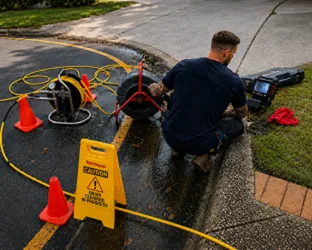
A manometer proves whether the installation loses pressure; detection fluid and instruments then walk it back to the guilty joint or run.

The failed piece is replaced with compliant material to AS/NZS 5601, one connector or a full rerun, never sealant and optimism.
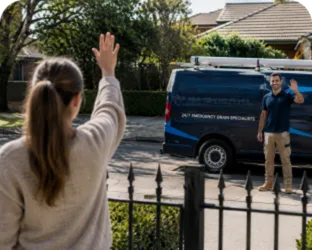
The whole installation holds on the gauge, appliances relight to clean blue flames, ventilation checks out, and the compliance record is yours.
New cooktop in its box, a bayonet that needs moving, or a smell you are not sure about: call and it gets done properly.
Licensed, pressure-tested, documented: every time. Smelling gas this minute? 131 909 from outside comes first.

Leave your details and our local Manly team will call you back fast.